

Whether you’re building custom components, replacing industrial parts, or creating prototypes, the right CNC equipment makes all the difference.
What Are CNC Machines?
CNC (Computer Numerical Control) machines operate using programmed instructions to guide cutting tools, spindles, and machine movements. Unlike manual machines, CNC systems follow digitally generated paths that ensure consistency, repeatability, and superior accuracy.
Key Advantages of CNC Equipment:
High precision and tight tolerances
Faster production cycles
Ability to produce complex shapes
Reduced labor involvement
Enhanced safety and reliability
These benefits have made CNC machines essential across manufacturing, industrial repair, engineering, and fabrication sectors.
Common Types of CNC Machines and Their Uses
1. CNC Milling Machines
CNC milling machines are among the most widely used tools in manufacturing. They utilize rotary cutting tools to remove material from a workpiece.
Applications of CNC Milling:
Creating slots, pockets, and contours
Producing brackets, plates, and mounts
Manufacturing precision components for industrial equipment
Machining complex 2D and 3D geometries
Industries Using CNC Milling:
Aerospace
Automotive
Industrial fabrication
Product design and prototyping
CNC mills can operate on multiple axes (3-axis, 4-axis, 5-axis), allowing them to handle intricate designs and detailed machining.
2. CNC Turning Centers (Lathes)
CNC turning machines rotate the workpiece while a cutting tool shapes it. They are ideal for producing cylindrical, rounded, or threaded components.
Applications of CNC Turning:
Shafts and bushings
Threaded parts
Pins, collars, and custom fasteners
Cylindrical mechanical components
Industries Using CNC Turning:
Automotive and motorsports
Heavy equipment manufacturing
Oil and gas machinery
Agricultural equipment
Turning centers provide high-speed production with excellent repeatability, especially for round-profile components.
3. CNC Plasma Cutters
CNC plasma cutters use a high-temperature plasma arc to cut through electrically conductive materials, such as steel and aluminum.
Applications:
Cutting thick steel plates
Fabricating custom brackets
Industrial equipment repairs
Creating clean, precise profile cuts
Benefits:
Fast cutting speeds
Ability to cut thicker metals efficiently
Cost-effective for large sheets and structural fabrication
Plasma cutting is especially useful for fabrication shops and industries focused on heavy-duty equipment.
4. CNC Laser Cutters
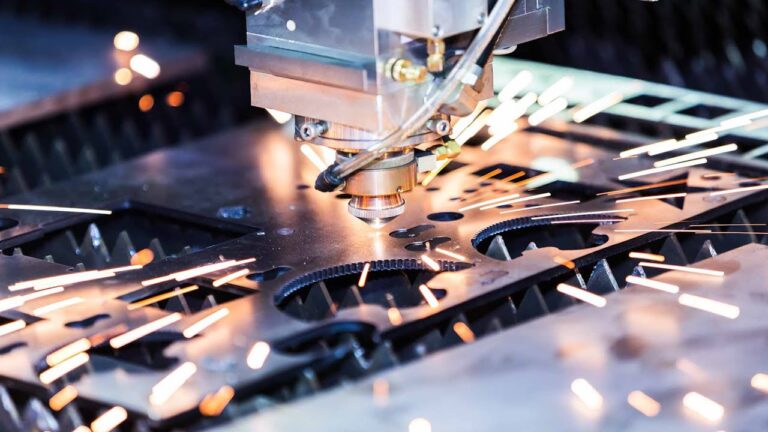
Laser cutters use a concentrated beam of light to cut or engrave materials with exceptional accuracy.
Applications:
Thin metals, plastics, and detailed fabrication
Complex patterns and fine cuts
Decorative and architectural components
Precision engraving
Where Laser Cutting Excels:
High-precision projects
Clean edge finishes
Intricate patterns that require minimal finishing
Laser systems are ideal for industries requiring detailed, lightweight, and accurate components.
5. CNC Routers
CNC routers are similar to milling machines but are typically used for softer materials.
Common Materials:
Wood
Plastics
Foam
Soft aluminum
Applications:
Sign-making
Mold creation
Prototypes
Industrial fixtures
Routers offer speed and versatility for manufacturing lighter components.
6. CNC EDM (Electrical Discharge Machining)
EDM machines remove material using electrical sparks rather than cutting tools. They can achieve extremely tight tolerances and handle materials too hard for traditional cutters.
Applications:
Tool and die manufacturing
Mold components
Precision cavities
Hardened steel machining
EDM is indispensable in industries requiring small, detailed shapes and ultra-precise finishes.
7. CNC Grinding Machines
These machines use rotating abrasive wheels to achieve extremely smooth surface finishes or precise dimensional accuracy.
Applications:
Final finishing on hardened metals
Precision surface grinding
High-tolerance components
Grinding is often the last step in manufacturing parts that require perfect surface quality.
How to Choose the Right CNC Machine for Your Project
Selecting the right CNC machine depends on various factors:
1. Type of Material
Plasma and laser cutters handle sheet metals
Milling and turning work with metals, plastics, and alloys
Routers are ideal for softer materials
2. Design Complexity
5-axis milling is needed for complex geometries
Turning is best for cylindrical parts
EDM handles extremely precise and hard materials
3. Production Volume
CNC mills and turning centers are great for high-volume production
EDM and grinding are slower but more precise for specialty work
4. Required Precision
Tighter tolerances → CNC milling, turning, or EDM
Moderate tolerances → plasma or router cutting
Understanding the project requirements helps determine which machine will deliver the best results efficiently and accurately.
Conclusion
CNC machining covers a wide range of machines, each designed for specific applications and performance needs. From milling and turning to plasma cutting, laser shaping, and EDM, these technologies empower businesses with versatility, accuracy, and efficiency that traditional tools cannot match. Choosing the right CNC machine ensures strong performance, clean finishes, and dependable results across industries.
For professional CNC machining solutions tailored to your project requirements, contact Steampunk Fabrication. We proudly serve Hazlehurst with precision-engineered machining services built on skill, accuracy, and trusted fabrication expertise.