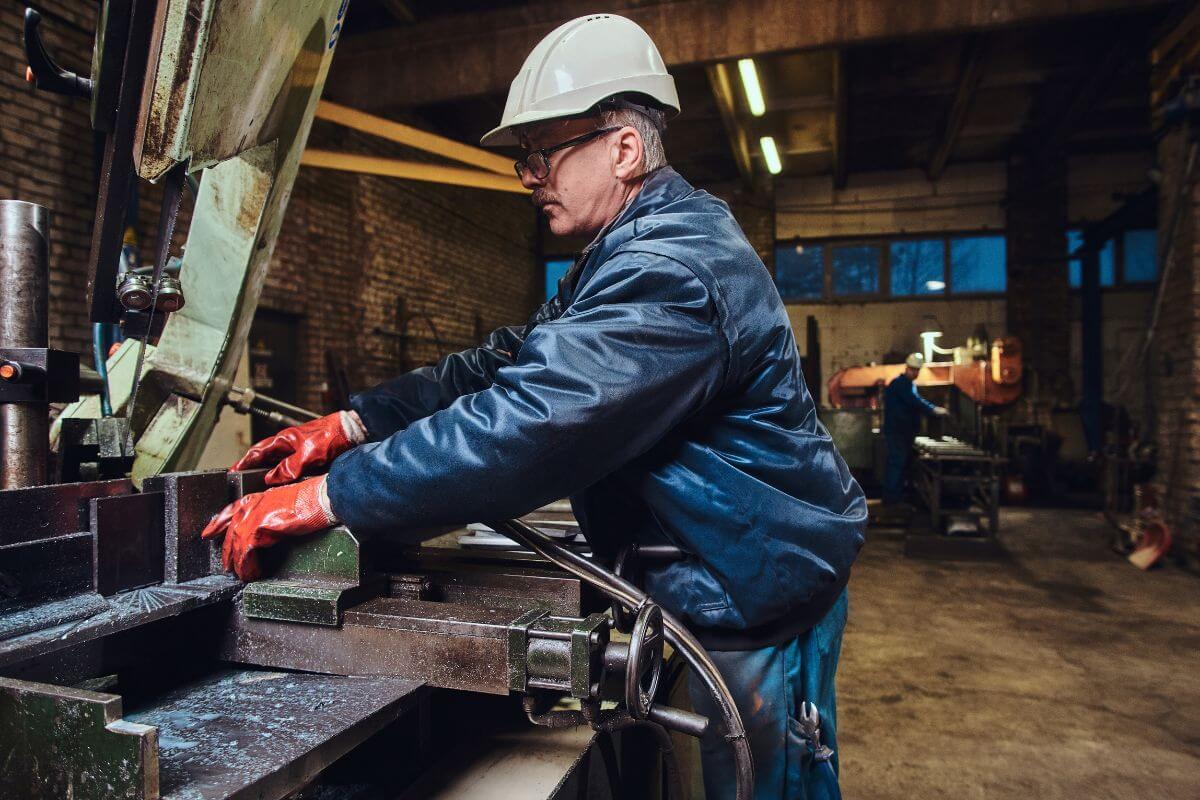
Industrial machinery does not run well by accident. Behind every piece of equipment that operates smoothly, draws the right amount of power, and goes years between breakdowns, there is precision work that happened before it ever reached full speed — installation done to exact specification, alignment checked and confirmed with proper tools, and a maintenance approach that addresses problems before they become failures.
That precision work is what millwrights do.
A millwright is a specialist in industrial machinery — the person responsible for installing it correctly, aligning it accurately, repairing it when it fails, and overhauling it when restoration makes more sense than replacement. The role exists because industrial machinery is unforgiving. A pump installed slightly off-level, a motor coupled without proper shaft alignment, a belt drive running on pulleys that are not in the same plane — none of these announce themselves immediately. They show up gradually, as increased vibration, premature bearing failure, excessive energy draw, and eventually an unplanned shutdown that costs far more to deal with than the original precision work would have.
Understanding what millwright services cover, and why each discipline matters, helps industrial facility managers make better decisions about their equipment — both when problems arise and well before they do.
What Millwright Services Actually Cover
The term “millwright” gets used broadly, and it is worth being specific about what the work involves.
A millwright installs, maintains, repairs, and overhauls industrial machinery and mechanical equipment. The work is precision-driven by nature — tolerances are tight, alignment specifications are exact, and the consequences of getting it wrong are measured in premature equipment failure, increased energy consumption, excessive wear, and unplanned downtime that disrupts operations and costs money.
Millwright services broadly fall into four categories: machinery installation, alignment, repair and overhaul, and retrofitting and upgrades. Each requires a different set of skills and tools, and each has a direct impact on how well and how long industrial equipment performs.
Machinery Installation — Why the First Step Determines Everything After
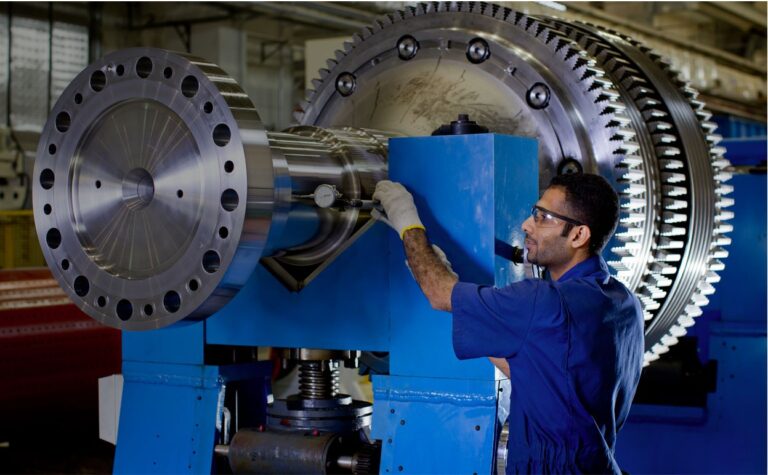
Installing industrial machinery is not simply a matter of positioning a piece of equipment and fastening it in place. Done correctly, machinery installation involves precise positioning, levelling, alignment to the connected systems, and careful integration with existing equipment and infrastructure. Every one of those steps affects how the machine runs from day one, and every shortcut taken at installation shows up as a problem later.
The understanding behind quality millwright installation is straightforward: how a machine is set up at the beginning determines how it performs across its entire operating life. Equipment installed with care runs better, draws less energy, produces less vibration, and lasts longer between maintenance intervals. Equipment installed without that care creates problems from the first startup and compounds them over time.
When a machinery installation is done properly, the equipment is correctly positioned, aligned, and fully integrated into the existing system before it is signed off. That means verifying alignment at the shaft, confirming base plate integrity, and checking that the machine is operating within its design parameters from day one — not discovering problems after it has been running for three months.
Laser Alignment — The Detail That Changes Equipment Life
Of all the millwright disciplines, laser alignment may be the one that delivers the clearest and most measurable return for industrial facilities.
Misalignment is one of the leading causes of premature bearing failure, excessive vibration, seal leaks, increased power consumption, and shortened equipment life across industrial operations. When a pump or motor is even slightly out of alignment with its connected shaft, the mechanical stress on the bearings, seals, and coupling increases significantly. Over time — sometimes within months — that stress adds up to a failure that was entirely preventable.
The same applies to belt and pulley systems. Misaligned pulleys cause uneven belt wear, increased load on bearings, and accelerated deterioration across the entire drive system. A belt that should last years fails in months. Bearings that should run cleanly overheat. The energy the system draws goes up, and the output it delivers goes down.
Laser alignment tools provide the accuracy that older methods cannot match. The result is rotating equipment that runs smoother, consumes less power, and extends its operating life significantly. For facilities running pumps, motors, and conveyors continuously, the value of proper laser alignment is not theoretical — it shows up directly in maintenance costs and equipment uptime.
Repair and Overhaul — Addressing the Root Cause, Not the Symptom
Even well-maintained industrial equipment eventually needs attention. Bearings wear. Shafts develop runout. Couplings fatigue. Components that have been running under load for years reach the point where restoration becomes the right decision — and when that happens, the quality of the repair determines how long the equipment performs before the next intervention is required.
Effective repair and overhaul work starts with identifying the actual cause of the failure, not just the visible symptom. A bearing that has failed repeatedly is not a bearing problem — it is usually an alignment problem, a lubrication problem, or a load problem that has been expressing itself through the bearing. Replacing the bearing without addressing the root cause produces another failure on the same timeline.
Comprehensive overhauls that address the underlying issue extend equipment lifespan and improve efficiency — which in most cases is a better outcome than replacement, and a significantly more cost-effective one.
Retrofitting and Upgrading Existing Equipment
Not every piece of industrial machinery needs to be replaced when it reaches the end of its original design life. In many cases, retrofitting and upgrading the existing equipment is the more practical path — improving performance, energy efficiency, or safety without the full cost and operational disruption of a complete replacement.
Upgrades that reduce energy consumption, improvements to control and automation systems, and enhanced safety features retrofitted onto existing machinery all extend useful equipment life while improving how that equipment operates day to day. For industrial facilities managing aging equipment inventories, this approach often delivers better outcomes than replacement on a fixed schedule.
One Team Across Installation, Alignment, and Repair
Millwright work rarely happens in isolation on an industrial project. A machinery installation often requires fabricated base plates and structural supports. A repair might involve welding alongside the mechanical work. A retrofit might need machined components as part of the upgrade.
Having a team that handles millwright work alongside welding, metal fabrication, and CNC machining under the same roof removes the coordination overhead that comes with managing multiple contractors. The installation team and the fabrication team are working from the same set of specifications, communicating directly, and accountable to the same outcome.
Ready to Support Your Facility
If your facility has equipment that needs installing, machinery that is not running the way it should, or systems that are overdue for maintenance or overhaul, the right next step is a direct conversation with a team that has handled this kind of work before.
Steampunk Fabrication provides millwright services to industrial and commercial facilities across Mississippi and the Gulf South, 24 hours a day, seven days a week, from our base in Hazlehurst, Mississippi. Get in touch with our team today and let us know what your facility needs — we offer a free consultation to get started.